
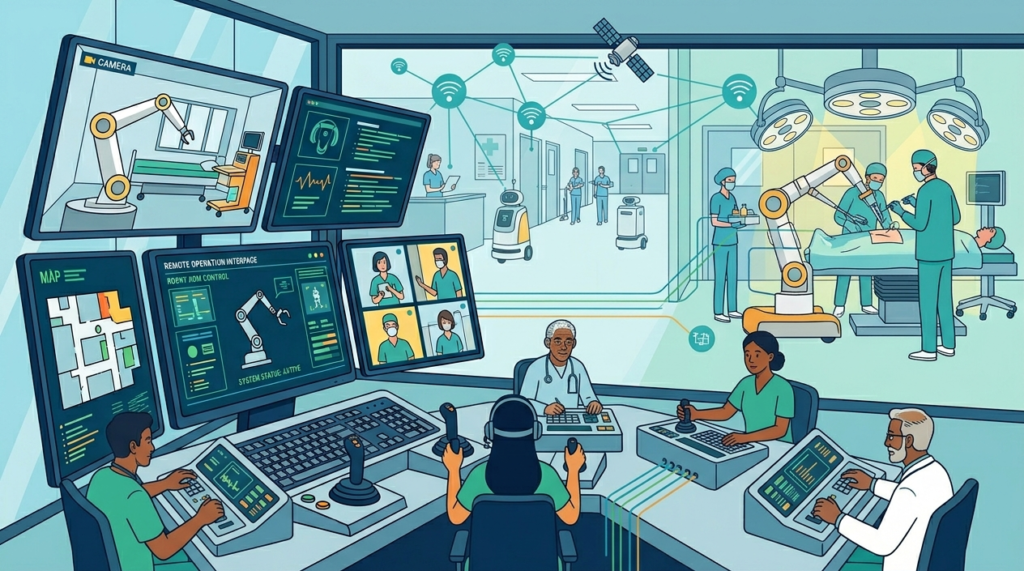
The landscape of healthcare is undergoing a profound transformation, driven by the relentless advancement of technology. Among the most impactful innovations are hospital robotic systems, which are revolutionizing how medical professionals deliver care. These sophisticated medical robots extend beyond simple automation, actively participating in patient support, logistical management, sanitation, and crucial monitoring tasks. At the heart of many of these advanced robotic systems lies a critical human element: the remote robot operator. These professionals are the linchpin, ensuring the seamless and safe operation of robotic systems from a distance. By harmonizing the precision of robotics with indispensable human oversight and surgical expertise, hospitals are unlocking new levels of efficiency, elevating patient care, and maintaining the highest safety standards. This article delves into the multifaceted role of these operators, exploring how they are shaping the future of healthcare delivery.
What Are Remote Robot Operators?
The core responsibilities of a remote robot operator encompass monitoring, navigation, intervention, and safety assurance.
Remote robot operators are highly trained professionals tasked with the remote monitoring, control, and support of robots operating within a hospital environment. Their role is pivotal in managing the growing fleet of robotic systems designed to enhance daily operations and patient care. This human-in-the-loop approach ensures that advanced automation is coupled with indispensable human judgment, guaranteeing both reliability and responsiveness.
The core responsibilities of a remote robot operator typically include:
- Real-time monitoring of robot performance: Ensuring that robotic arm movements, sensor data, and operational status are within optimal parameters.
- Assisting with navigation and task execution: Guiding robots through complex hospital layouts and helping them complete programmed tasks efficiently.
- Responding to unexpected situations: Quickly intervening when deviations from normal operation occur, such as encountering unforeseen obstacles or system anomalies.
- Ensuring safe and efficient operation: Upholding strict safety protocols and optimizing robot performance for maximum utility.
This vital function allows hospitals to leverage the power of automation while retaining critical human oversight, ensuring that robotic systems serve as extensions of hospital capabilities rather than standalone, autonomous entities.
Supporting Daily Hospital Operations
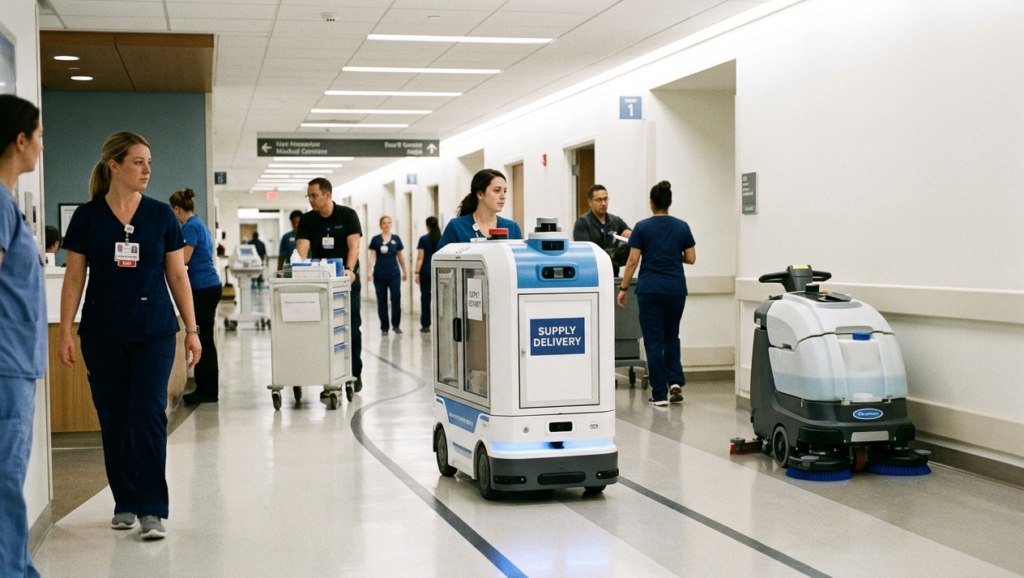
The integration of medical robots into daily hospital workflows is a significant step towards optimizing resource allocation and operational efficiency. These robots are adept at handling a wide array of tasks, from the timely delivery of critical medical supplies and the transportation of vital equipment to performing meticulous sanitation duties. The presence of remote robot operators is crucial for these automated systems to function optimally.
Remote operators act as the navigators and supervisors for these machines. They guide robots through the often-congested and dynamic hospital corridors, adjusting routes in real-time to avoid collisions with hospital staff, patients, or unexpected obstructions. Furthermore, they ensure that the delivery of supplies is not just prompt but also accurate, confirming the right items reach the right departments precisely when needed. By managing these operational facets, remote operators liberate valuable time for hospital staff, allowing them to dedicate more of their attention and energy directly to patient care, a core tenet of effective healthcare delivery. This synergy between automation and human supervision significantly boosts overall healthcare efficiency.
Enhancing Patient Care and Experience
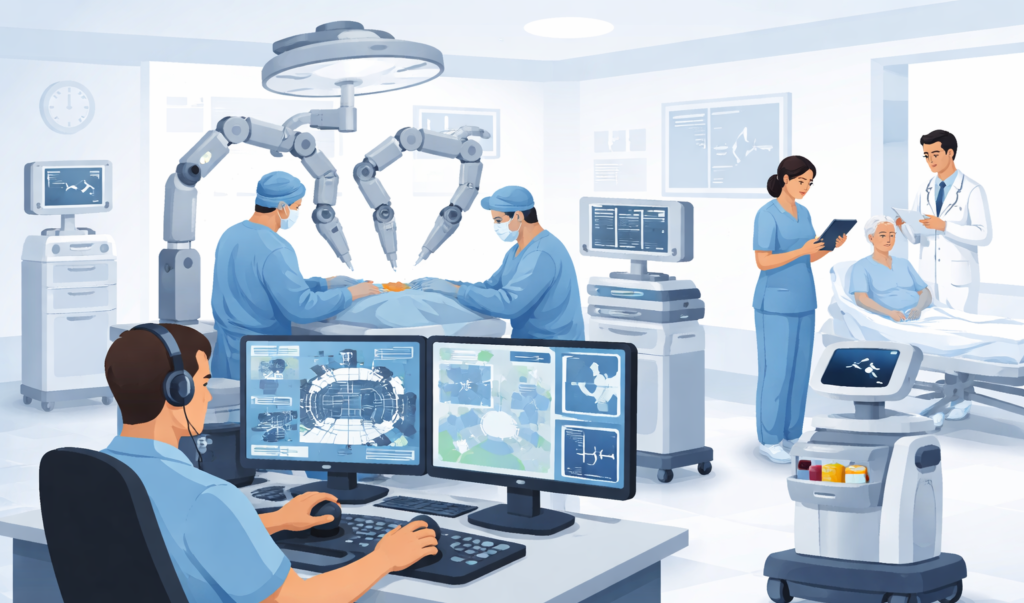
While the sophisticated functionalities of robotic systems are impressive, the human element remains paramount in delivering compassionate and effective patient care. Remote robot operators play a nuanced role in enhancing the patient experience, particularly when robots are involved in patient-facing interactions. These operators act as a bridge, ensuring that automated systems respond appropriately to individual patient needs and circumstances.
In some cases, telepresence robots are used for remote consultations or patient check-ins. Remote operators can help improve communication between the patient and the medical professional, especially if technical issues occur. They can also guide the robot’s responses to ensure they are appropriate and sensitive. This is important in situations that require human judgment and empathy, which robots may not fully provide. This combination of robotic accuracy and human support improves the patient experience. It helps make care more effective and supportive. With skilled operators, these robots also allow remote assessments. This extends healthcare services beyond physical limits and improves access to care.
Improving Safety and Compliance
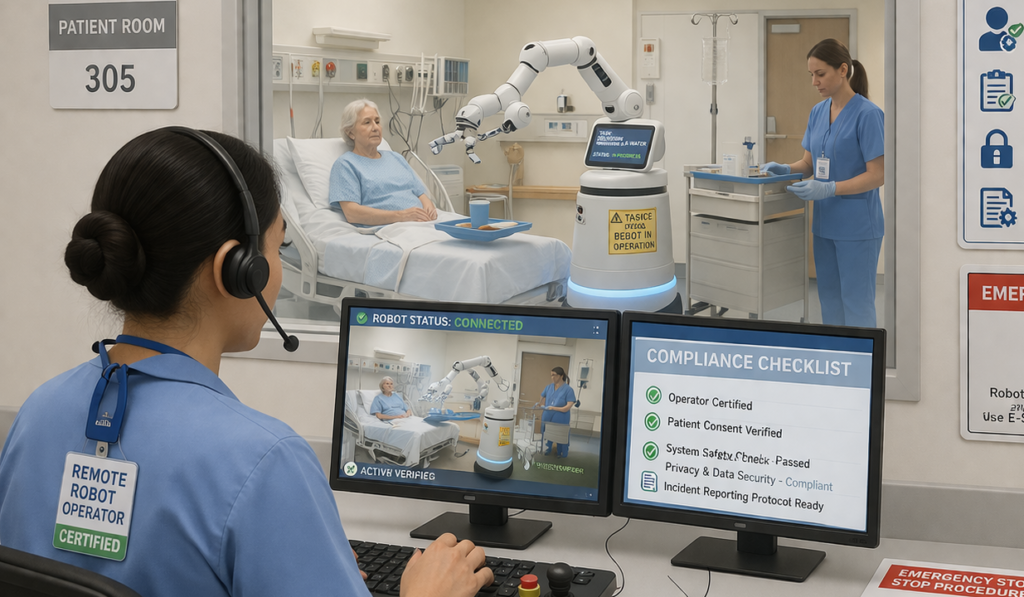
Maintaining stringent safety and compliance standards is non-negotiable in any hospital setting. Remote robot operators are instrumental in upholding these critical benchmarks when operating robotic systems. Their constant vigilance and the ability to intervene promptly are key to preventing errors and mitigating risks.
Operators meticulously monitor the behavior of robots, ensuring their movements and actions align with programmed protocols and established safety guidelines. This oversight is particularly vital during complex procedures or in sensitive areas of the hospital. They are trained to identify potential hazards or deviations from safe operating parameters and to respond swiftly to avert accidents or system malfunctions. For example, if a Surgical Robot or a robotic arm indicates an anomaly during a procedure, the operator can immediately halt the operation or adjust settings to ensure patient safety. Moreover, they ensure that the operation of all robotic systems complies with internal hospital protocols and external regulatory mandates. This human oversight acts as a critical safeguard, making robotic integration not only efficient but also exceptionally reliable and secure within the demanding healthcare environment. This is where robust cybersecurity measures become paramount, especially for remote-enabled robotic systems.
Real-Time Monitoring and Incident Response
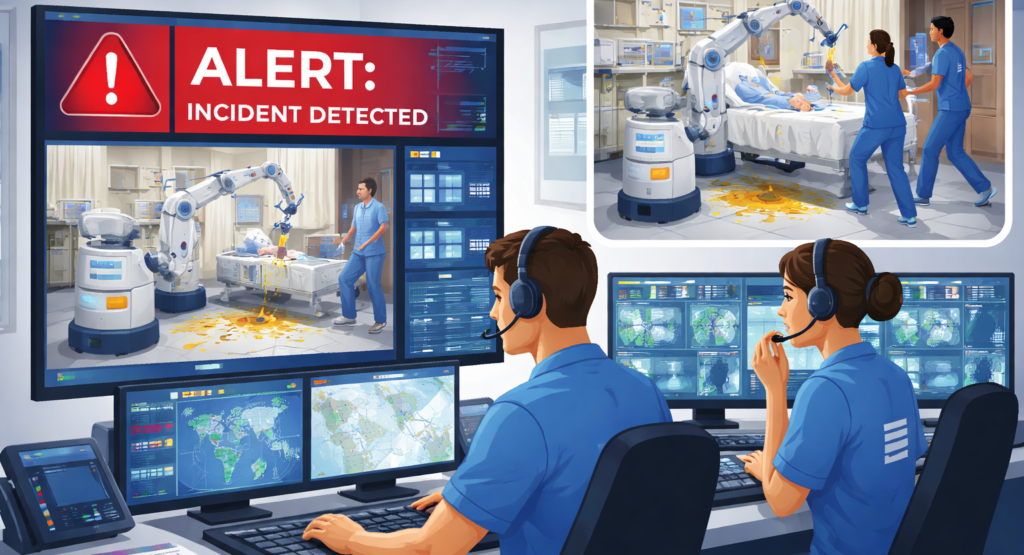
The hospital environment is inherently dynamic, characterized by constant changes and unpredictable situations. Remote operators provide essential real-time monitoring capabilities, ensuring that robotic systems can adapt effectively to these evolving conditions. Their proactive oversight is crucial for minimizing downtime and maintaining uninterrupted operations.
When unexpected events happen, remote operators can respond right away. These events may include system errors, obstacles in the robot’s path, or changes in the environment. Operators can fix issues remotely, guide the robot away from danger, or stop its operation if needed. This quick response helps prevent bigger problems. This is especially important in robotic surgery, where even short interruptions can be risky. If a network issue affects control, the operator can act immediately to keep the procedure running safely. Fast response reduces delays, protects ongoing tasks, and improves the reliability of the hospital’s robotic systems.
Improving Efficiency Through Automation
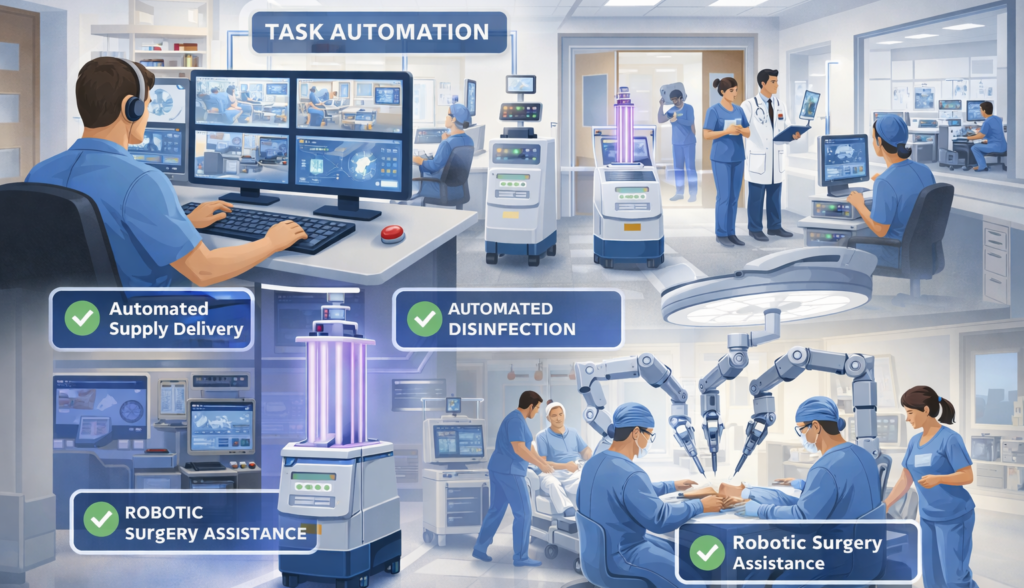
Robotic surgery and automated systems are designed to improve efficiency. However, they reach their full potential only when they are managed properly. Remote robot operators play an important role in this process. They help ensure that robotic systems work effectively and deliver the best results for healthcare facilities.
The benefits derived from this optimized management are multifaceted. Firstly, it leads to a substantial reduction in the workload for on-site hospital staff, freeing them from routine or labor-intensive tasks. Secondly, the streamlined operation and prompt task completion facilitated by skilled operators accelerate workflows across various departments. This improved coordination between departments, enabled by reliable robotic assistance, ensures that resources are utilized optimally. By maximizing the operational efficiency of their robotic assets, hospitals can enhance their overall service delivery, achieve faster turnaround times for critical tasks, and ultimately, improve the quality of care they provide. This is particularly relevant as the global medical robots market is projected to grow significantly, reaching a forecasted value of US$33.8 billion by 2029, up from US$16.0 billion in 2024. This growth underscores the increasing reliance on these systems and the operators who manage them MarketsandMarkets, 2025.
Scalability in Healthcare Systems
As hospitals and healthcare networks grow, managing operations becomes more complex. Remote robot operators provide a scalable solution to handle this challenge. They allow hospitals to expand their use of automation without increasing the number of on-site staff. This is especially important as the healthcare industry faces worker shortages. Some forecasts show a shortage of about 100,000 healthcare workers by 2028.
A centralized team of remote operators can effectively manage a diverse fleet of robots across multiple departments or even different hospital branches. This allows for the consistent deployment of robotic services throughout an expanding organization. By centralizing the control of robotic systems, hospitals can scale their operations more efficiently. This approach helps maintain high service quality and reliable performance as they grow. It also allows the benefits of robotic technology, such as better efficiency and improved patient care, to be used across the entire healthcare network. This makes it a smart and practical strategy for long-term growth. The development of remote-enabled robotic systems is at the forefront of this scalability.
The Importance of Remote Operator Services
In modern hospitals, managing advanced robotic systems is very important. These systems play a key role in daily operations and patient care. Many healthcare providers use specialized remote operator services to keep these systems running smoothly and efficiently. These services provide trained professionals with the skills needed to manage robotic technologies. They oversee systems used for robot-assisted surgery, logistics, and other medical tasks. With expert support, hospitals can ensure reliable performance and better use of their robotic systems.
By working with professional remote operator services, hospitals can maintain consistent system performance and reduce downtime. These experts help ensure that robotic systems are used efficiently and operate without issues. This allows hospital staff to focus on their main clinical duties. They can work with confidence, knowing that trained professionals are managing the robotic systems. In the long term, these services improve efficiency, enhance patient care, and help hospitals get the most value from their investment in robotic surgery technology. This includes managing critical aspects like teleoperation latency and ensuring reliable remote communication.
The Importance of Remote Operator Services
In modern hospitals, managing advanced robotic systems is very important. Many healthcare providers see the value of using specialized remote operator services to keep these systems running smoothly. These services provide trained professionals with the skills needed to manage robotic technologies. They oversee systems used for robot-assisted surgery, hospital logistics, and other medical tasks. With expert support, hospitals can ensure efficient and reliable use of their robotic systems.
By working with professional remote operator services, hospitals can maintain consistent system performance and reduce downtime. These experts help ensure that robotic systems run smoothly and are used effectively. This also allows hospital staff to focus on their main clinical duties. They can work with confidence, knowing that trained professionals are managing the robotic systems.
This includes managing critical aspects like teleoperation latency and ensuring reliable remote communication. These services help hospitals get the most value from advanced systems like the da Vinci Surgical System and adapted robots such as KUKA. They improve how these technologies are used in daily operations. This leads to better efficiency and smoother workflows. They also help improve patient care and expand access to advanced treatments. In the long run, these services ensure that hospitals gain the full benefits of their investment in robotic surgery technology.
The Critical Infrastructure: Surgical-Grade Networks and Communication
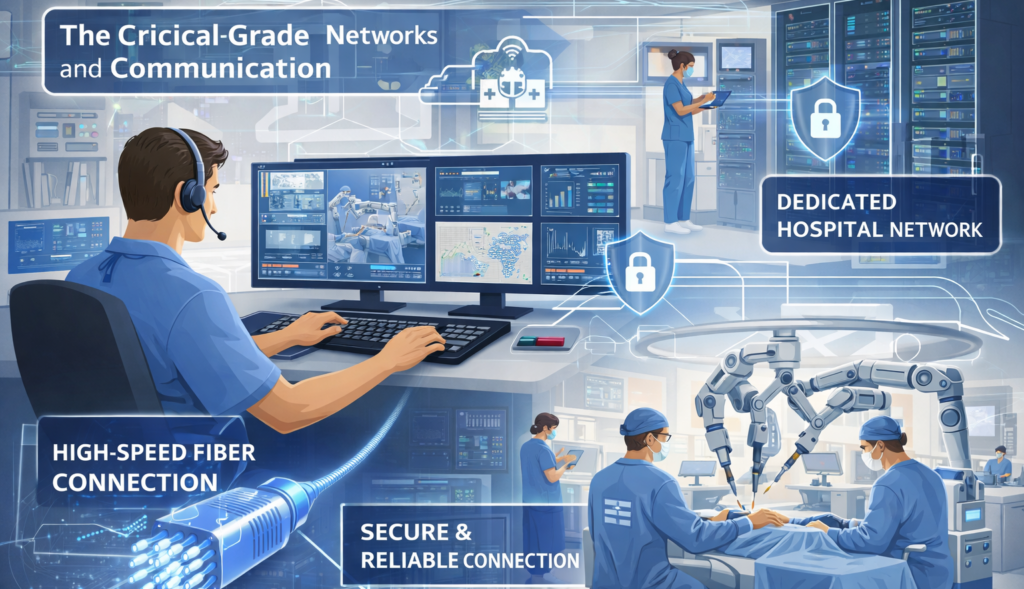
The success of remote surgery depends on strong technology, especially reliable network systems. These networks allow doctors to control robotic systems from a distance. For robotic surgery, especially those using robotic arms for minimally invasive procedures, a stable and secure connection is essential. This is where surgical-grade networks become important. These networks are designed to provide high reliability, fast response, and strong security. Unlike regular networks, they are built to support the precision and safety required in medical procedures.
A key feature of these networks is their ability to manage latency, or the delay between an operator’s action and the robot’s response. Reducing this delay is important for safe and accurate control. High-speed technologies like 5G help achieve this. They provide the speed and low latency needed for near real-time interaction. Surgical-grade networks also ensure that data is sent and received clearly, with minimal interference. This helps maintain system reliability and accuracy. Advanced tools such as 3D views and virtual reality give operators better control. These tools help them feel present, even when they are far away. This strong system supports robot-assisted surgery and future robotic technologies, while still allowing human oversight for safety and precision.
Cybersecurity: The Unseen Operator of Remote Robotic Surgery
The growing use of remote robotic systems in hospitals highlights the need for strong cybersecurity. As these systems become more connected, they also face higher risks from cyber threats. These threats can include attacks that disrupt operations or attempts to inject harmful data into the system. Such issues can damage performance and compromise system security. If a surgical robot is affected, the risks are serious. It can put patient safety at risk and lead to violations of privacy regulations. For this reason, strong cybersecurity measures are essential to ensure safe and reliable robotic operations.
To counter these risks, adherence to stringent cybersecurity standards is paramount. This includes compliance with guidelines like FDA Cybersecurity in Medical Devices, which mandates a lifecycle approach to device security, and HIPAA 45 CFR Part 160 in the United States, ensuring patient data privacy. In Europe, the EU GDPR imposes strict data protection requirements. Cryptographic security is further bolstered by standards such as FIPS 140-3 and NIST SP 800‐131A Rev. 2. Implementing a comprehensive security service and a multi-layered security solution is essential.
Security in robotic systems relies on strong protection methods. These include end-to-end encryption, secure session key management, and advanced threat detection. Technical elements, such as system IDs and site ownership controls, also support overall security. They help ensure that remote procedures take place in a safe digital environment. These systems must follow strict regulations, including EU MDR, from early approval to ongoing monitoring. The goal is to prevent unauthorized access and protect every robotic action. This ensures safe and reliable procedures, from routine operations to complex surgeries.
Operationalizing Remote Robotic Surgery: Case Studies and Applications
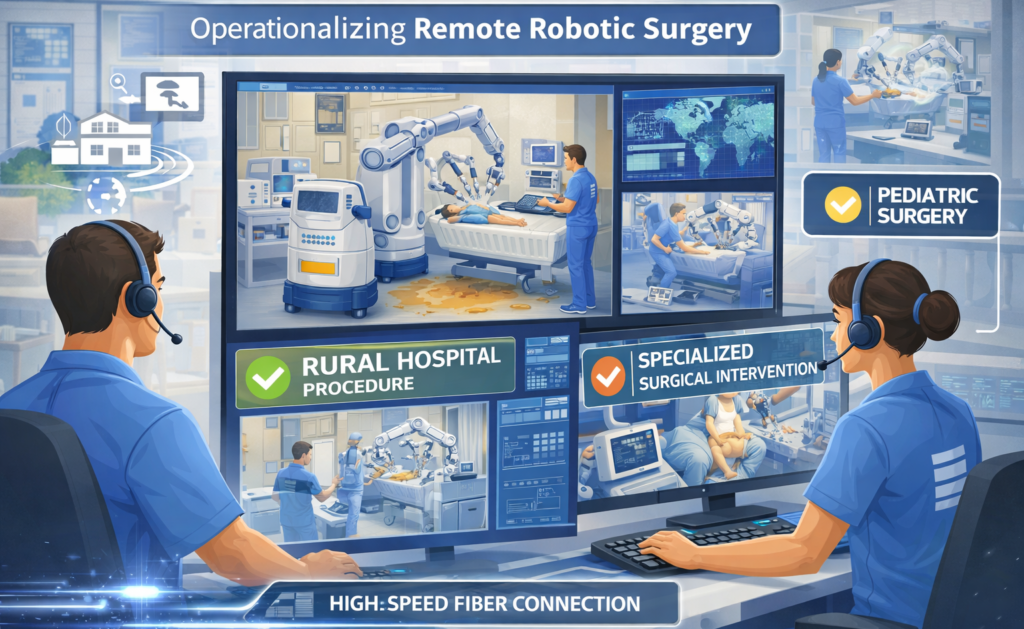
Remote surgery is no longer just an idea. It is now being used and improved in real-world healthcare. This shows how robotic systems can expand access to specialized surgical care. One key example is the Lindbergh Operation in May 2015. This procedure proved that minimally invasive surgery could be performed across long distances using robotic technology. This pioneering event paved the way for numerous subsequent remote procedures.
Today, doctors can perform complex surgeries from a distance. The patient and surgeon may be in different locations, sometimes hundreds of miles apart. These procedures use robot-assisted surgical systems to ensure accuracy and control. These technologies are used in many medical fields. They support procedures like video-assisted thoracic surgery, robotic kidney surgery, and laparoscopic operations that use low-pressure CO₂ for better patient comfort. Beyond surgery, remote systems are also used for medical assessments and diagnostics. This concept, known as medical telexistence, allows doctors to assist patients without being physically present. It is also useful in dangerous environments and during disaster response. Advances in robotic technology, such as artificial muscles and improved sensors, continue to expand what these systems can do. In the future, robots may assist in care homes and support daily healthcare tasks. As robotic systems continue to evolve, they are improving surgical precision and expanding the use of robotic assistance in healthcare.
The Critical Infrastructure: Surgical-Grade Networks and Communication
The success of remote surgery depends on strong technology, especially reliable network systems. These networks allow doctors to control robotic systems from a distance. For robotic surgery, especially those using robotic arms for minimally invasive procedures, a stable and secure connection is essential. This is where surgical-grade networks play an important role. These networks are designed to provide high reliability, fast response, and strong security. Unlike regular networks, they are built specifically to support the precision and safety required in medical procedures.
A key feature of these networks is their ability to manage latency, or the delay between an operator’s action and the robot’s response. Reducing this delay is important for safe and accurate control. High-speed technologies like 5G help solve this problem. They provide the speed and low delay needed for near real-time interaction. Surgical-grade networks also ensure that data is sent and received clearly, with minimal interference. This helps maintain system accuracy and reliability. Advanced tools such as 3D views, virtual reality, and smart software give operators better control. These tools help them feel present, even when they are far away. This strong system supports robot-assisted surgery and future robotic technologies, while still allowing human oversight for better precision and safety.
Cybersecurity: The Unseen Operator of Remote Robotic Surgery
The growing use of remote robotic systems in hospitals highlights the need for strong cybersecurity. As these systems become more connected, they also face higher risks from cyber threats. These threats can include attacks that disrupt operations or attempts to inject harmful data into the system. Such issues can damage system performance and compromise security. If a surgical robot is affected, the risks are serious. It can impact patient safety and violate privacy rules like HIPAA. Because of this, secure system design and strong protection measures are essential for safe and reliable robotic operations.
To counter these risks, adherence to stringent cybersecurity standards is paramount. This includes compliance with guidelines like FDA Cybersecurity in Medical Devices, which mandates a lifecycle approach to device security, and HIPAA 45 CFR Part 160 in the United States. In Europe, the EU GDPR imposes strict data protection requirements. Cryptographic security is further bolstered by standards such as FIPS 140-3 and NIST SP 800‐131A Rev. 2. Implementing a comprehensive security service and a multi-layered security solution is essential. Security in robotic systems depends on strong protection methods. These include end-to-end encryption, secure key management, and advanced threat detection. Technical elements, such as system IDs and site ownership controls, also help improve overall security. They ensure that remote procedures take place in a protected digital environment. These systems must follow strict regulations and standards, including EU MDR and ISO/IEEE guidelines. This applies to all stages, from initial approval to ongoing monitoring. The goal is to prevent unauthorized access and protect every robotic action. This ensures safe and reliable procedures, from routine operations to complex robotic surgeries.
Operationalizing Remote Robotic Surgery: Case Studies and Applications
Remote surgery is no longer just an idea. It is now being used and improved in real-world healthcare. This shows how robotic systems can expand access to specialized surgical care. One important example is the Lindbergh Operation. This procedure proved that minimally invasive surgery could be performed across long distances using robotic technology. This breakthrough helped open the door for many other remote surgeries and advancements in robot-assisted procedures.
Today, doctors can perform complex surgeries from a distance. The patient and surgeon may be in different locations, sometimes hundreds of miles apart. These procedures use robot-assisted systems like the da Vinci Surgical System or robots such as KUKA. These technologies are used in many medical fields. They support procedures like video-assisted thoracic surgery, robotic kidney surgery, and laparoscopic operations that use low-pressure CO₂ for better patient comfort. Beyond surgery, remote systems are also used for medical assessments and diagnostics. This concept, known as medical telepresence, allows doctors to assist patients without being physically present. It is also useful in dangerous environments and during disaster response. Advances in robotic technology, such as artificial muscles and improved sensors, continue to expand what these systems can do. In the future, robots may assist in care homes and support daily healthcare tasks. As robotic systems continue to evolve, they are making minimally invasive surgery more accessible and improving the overall efficiency and accuracy of healthcare.
Challenges and the Path Forward
Remote robot operators have strong potential in hospital robotics, but there are still challenges to overcome. One major issue is teleoperation delay, also known as latency. Although 5G and advanced networks help reduce delays, it is still difficult to maintain fast and stable connections in all situations. Network reliability is also very important. Any connection problem can affect the safety of remote procedures and must be carefully managed.
Regulations for robotic systems are still evolving. Frameworks like EU MDR now include rules for remote-enabled robots. Following standards such as ISO/IEEE guidelines is important to ensure safe and reliable operation. Training is also a key factor. Hospitals need to update their programs to include remote operation. This requires new learning methods and a shift in how staff use technology. The system interface must be easy to use and provide clear feedback. Advanced tools like sensors and virtual reality can help improve the operator’s control and experience. Looking ahead, progress will depend not only on technology but also on ethics, strong cybersecurity, and wider access to advanced care. The future will combine human skills with robotic systems, supported by skilled remote operators.
Final Thoughts
Remote robot operators play a key role in modern hospital robotics. They are not just technicians; they connect advanced technology with human decision-making and patient safety. They monitor robotic systems, manage delays in teleoperation, and ensure strong cybersecurity measures are in place. This support allows hospitals to perform procedures like minimally invasive and robot-assisted surgery with high accuracy. Their role helps improve precision and expand the reach of advanced medical care.
Medical robots support many healthcare tasks, from daily hospital operations to complex remote surgery. Their role continues to grow as technology improves. With the help of artificial intelligence, advanced imaging, and smart software, these robots can perform tasks with greater accuracy and efficiency. Hospitals are also using tools like telepresence robots and systems such as the da Vinci Surgical System to improve patient care. Remote operators play an important role in managing these technologies. They help extend medical expertise, improve efficiency, and support hospitals as they handle growing demands. This became even more important during challenges like the COVID-19 pandemic. The combination of human oversight and robotic precision is shaping a safer, more efficient, and more accessible future for healthcare.